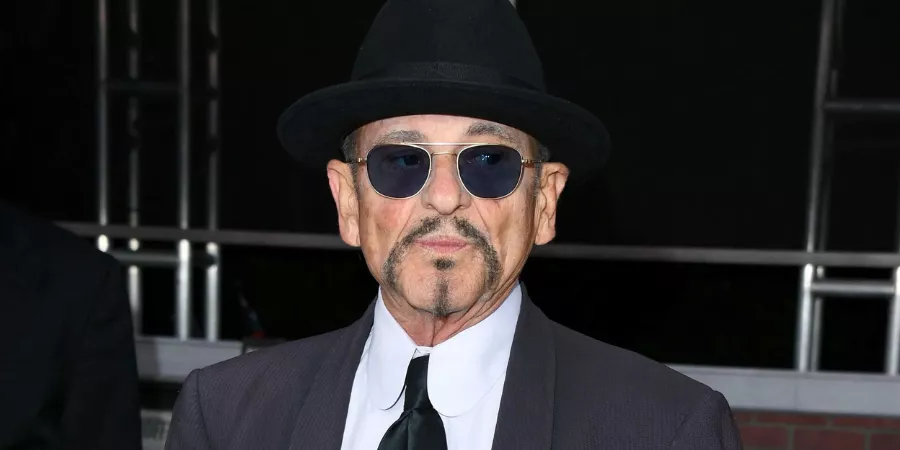
Joe Pesci is one of the most distinctive actors in the history of American cinema. His work across five decades produced performances that remain among the most studied and imitated in the character actor tradition, and his Academy Award win for Goodfellas cemented a legacy that extends well beyond any single role. Yet despite the intensity of his screen presence, Pesci has spent most of his life conducting his personal affairs with a privacy and discretion that stands in sharp contrast to the volatility of many characters he portrayed. Understanding his career requires understanding both dimensions: the explosive professional work and the guarded personal world that surrounded it. For the full story of his daughter’s life, see our complete guide to Tiffany Pesci’s private life.
Early Life and the Road to Hollywood
Joe Pesci was born on February 9, 1943, in Newark, New Jersey. He grew up in a working-class Italian-American household in Belleville, and his early exposure to performance came through music rather than acting. He began performing as a child guitarist and singer, developing the stage presence and comfort with audiences that would later serve him in front of film cameras. His early acting career was modest. He appeared in small television roles and minor film parts during the 1960s and 1970s without achieving the breakthrough that his talent suggested was possible.
The career-changing moment came through Robert De Niro. De Niro saw Pesci performing and recommended him to director Martin Scorsese for Raging Bull in 1980. Pesci’s performance as Joey LaMotta earned him his first Academy Award nomination and announced to the industry that a significant new talent had arrived. The collaboration with Scorsese and De Niro that began with Raging Bull would define the most celebrated chapter of Pesci’s career.
The Scorsese Years: Goodfellas, Casino, and Critical Acclaim
The collaboration between Joe Pesci and Martin Scorsese produced two of the most memorable character performances in American crime cinema. In Goodfellas in 1990, Pesci played Tommy DeVito, a volatile and unpredictably dangerous member of the Lucchese crime family. The role required Pesci to embody a specific kind of menace: charming and funny in one moment, explosively violent in the next, with the transitions between those states happening faster than any character around him could anticipate or prepare for. The performance won him the Academy Award for Best Supporting Actor.
His performance in Casino in 1995 as Nicky Santoro covered similar thematic territory but with greater complexity. Nicky is not Tommy DeVito with different clothes. He is a character whose violence is more calculated, whose intelligence is more visible, and whose eventual fate reflects the internal logic of the world he inhabits more deliberately. The film starred both Pesci and Robert De Niro, continuing a professional partnership that had already produced remarkable work and that would culminate much later with The Irishman in 2019.
Versatility Beyond Crime Films
While the Scorsese crime films define Pesci’s critical reputation, his commercial range was considerably broader. His role as Harry Lime’s bumbling criminal partner Marv in Home Alone in 1990 and its 1992 sequel demonstrated genuine comedic timing and a willingness to undergo physical comedy that the dramatic roles never required. The contrast between Tommy DeVito and Marv is so complete that it illustrates the range available to an actor who is often typecast in retrospective discussion.
My Cousin Vinny in 1992 gave him another showcase in a different register entirely, playing a Brooklyn lawyer navigating an Alabama murder trial with a combination of street-smart confidence and procedural incompetence. The film remains a favorite among legal professionals for its unusually accurate depiction of courtroom procedure, and Pesci’s performance is central to why it works as both comedy and courtroom drama.
Marriages and Personal Life
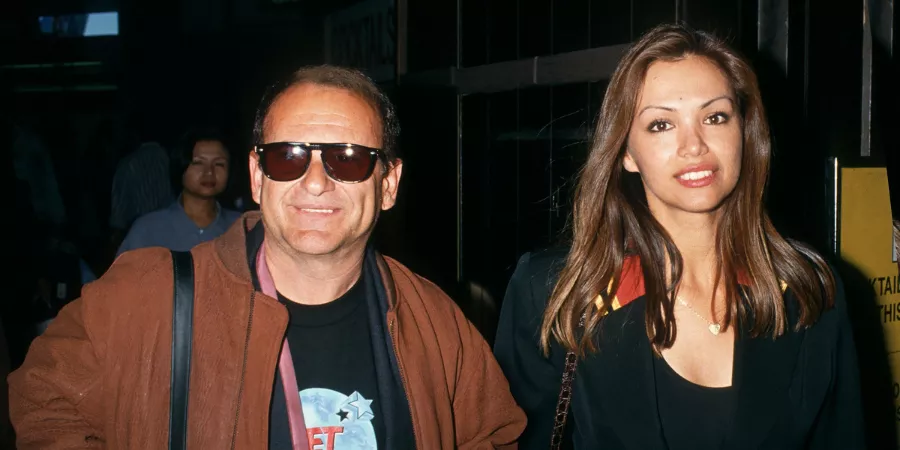
Joe Pesci has been married three times. His first marriage to Cynthia Hicks ended in divorce. His second marriage was also dissolved before he met Claudia Haro. His marriage to Claudia Haro, which lasted from 1988 to 1992, produced his only child, Tiffany Pesci, born in 1992. Following the divorce from Claudia, Pesci maintained the same private approach to his personal life that had characterized his years in Hollywood even before his breakthrough.
He was reportedly engaged to actress Angie Everhart in the late 1990s, though the engagement did not result in marriage. In subsequent years he has maintained an extremely low personal profile, consistent with his longstanding preference for keeping professional achievement and private life in entirely separate compartments. His daughter Tiffany appears to have absorbed this same orientation, maintaining a private life that echoes her father’s approach even though she has never worked in acting.
Semi-Retirement and The Irishman
Following a period of reduced activity in the late 1990s and 2000s, Pesci largely stepped away from acting. His returns were selective and deliberate. The most significant was his performance in Martin Scorsese’s The Irishman in 2019, where he played crime boss Russell Bufalino alongside Robert De Niro and Al Pacino. The film earned extensive critical praise and demonstrated that Pesci’s capacity for subtle, controlled performance had deepened rather than diminished during his years away from the screen.
His return for The Irishman was widely read as a testament to his trust in Scorsese and the quality of the project rather than a general re-engagement with Hollywood. True to his pattern, the film’s release was not accompanied by any expansion of his public personal life or any departure from the discretion that has always characterized his off-screen existence.
Privacy as Career Philosophy
Joe Pesci’s approach to personal privacy is unusual among actors of his stature. Most performers who achieve the level of recognition he has attained engage with the machinery of celebrity to some degree, whether through social media, public appearances, or accessible personal narratives. Pesci has consistently declined to do so. His interviews are infrequent, carefully controlled in what they reveal, and almost entirely focused on his work rather than his personal life.
This orientation has almost certainly influenced Tiffany Pesci’s own choices. Growing up with a father whose default relationship with public attention was careful management rather than open engagement would naturally shape a child’s understanding of what public life costs and what privacy protects. The parallel between father and daughter in their approach to the public-private boundary is too consistent to be coincidental.
A Career Defined by Intensity and Discretion in Equal Measure
Joe Pesci’s legacy in American cinema rests on a body of work distinguished by a specific kind of emotional intensity that few actors have matched. The volatility visible in his best performances required genuine craft to produce, and that craft was developed and maintained through decades of professional discipline. The discretion he brought to his personal life reflects the same underlying seriousness about what matters and what does not. For the story of how those personal circumstances shaped his daughter Tiffany’s approach to life, read our complete profile on her private life. For the full background on the Claudia Haro case that forms the most turbulent chapter of the family’s public history, see our guide to Claudia Haro’s acting career and legal troubles.