There is a form of reconstruction that does not involve bricks or mortar but the quiet, painstaking work of the soul. It is a process that requires the dismantling of an old identity to make room for one built on purpose and clarity.
When a leader undergoes this level of personal transformation, the way they view systems, people, and the very nature of care undergoes a fundamental shift. Leadership ceases to be a title and becomes a form of stewardship, a commitment to creating environments where others can find the same path to wholeness.
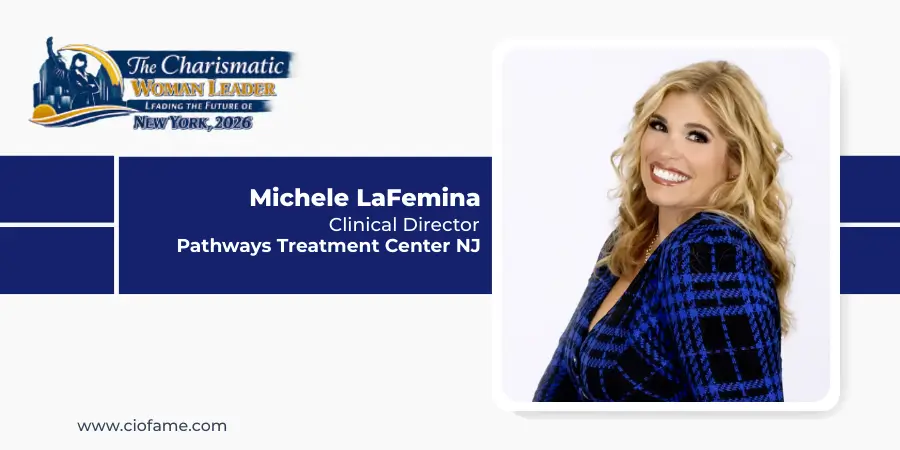
This is the foundation upon which Michele LaFemina has built her career. As the Clinical Director of Pathways Treatment Center NJ, she brings a perspective that is both professionally rigorous and deeply personal. Her journey into behavioral health was not a conventional climb up a corporate ladder but a response to a calling shaped by twenty-six years of lived recovery.
The Architecture of Restoration
Recovery is rarely a linear path. For Michele, the process of overcoming addiction and an eating disorder was more than a behavioral change. She describes it as spiritual surgery. This profound healing required a total restoration of the body, mind, and spirit, and it ultimately reshaped her understanding of human potential.
She learned early on that while willingness is the engine of change, belief is often the spark. In her view, having someone believe in you before you possess the capacity to believe in yourself can be a life-saving intervention. This realization has become the heartbeat of her work. For over two decades, she has walked alongside individuals in recovery, witnessing the quiet shifts and extraordinary transformations that occur when a person reclaims their dignity and rediscovers their purpose.
From Presence to Clinical Leadership
The transition from frontline support to clinical leadership was a natural evolution of her calling. While her initial focus was on supporting the individual, Michele eventually recognized that she could have a broader impact by shaping the systems that provide that support.
She operates with the conviction that culture determines outcomes. In her leadership model, when clinicians are properly supported, trained, and held accountable within a healthy environment, the quality of patient care is transformed. She brought the philosophy of recovery, compassion paired with strict boundaries, into the executive suite. For Michele, becoming a Clinical Director was an act of stewardship, ensuring that the care provided at Pathways remains ethical, effective, and human-centered.
Discipline and the New Charisma
As a leader shaping the future of healthcare in the New York region in 2026, Michele is acutely aware that visibility carries a significant responsibility. In a high-influence market, she strives to elevate standards and model a version of leadership where strength and empathy are partners rather than opposites.
Michele offers a distinct definition of charisma for the modern era. In 2026, charisma is not a performance or a display of personality. It is presence. It is the disciplined ability to inspire trust while driving measurable impact. This brand of leadership requires a blend of emotional intelligence and strategic precision, allowing a leader to remain grounded while navigating the complexities of a rapidly evolving industry.
The Intersection of Data and Dignity
At Pathways Treatment Center NJ, the commitment to compassionate care is reinforced by operational excellence. Michele has integrated measurement-based care and structured documentation into the center’s programming. By tracking outcomes and identifying trends through data, the team can adjust treatment plans in real time and strengthen the continuity of care.
This integration of technology is intentional. She maintains that technology does not replace the human connection that is vital to behavioral health. Instead, it sharpens it. By utilizing trauma-informed frameworks and relapse prevention models backed by data, the center ensures that every intervention is as effective as it is empathetic. Excellence, in her telling, is simply empathy executed consistently.
Stewardship in the High-Pressure Crucible
The healthcare landscape of 2026 presents significant challenges, from evolving regulations to workforce shortages. Michele views burnout not as a personal failure but as a systems issue. To support her team, she monitors caseload distribution, provides reflective supervision, and ensures there is space for clinicians to process complex cases.
She believes that women in leadership roles often bring a unique relational intelligence to these challenges, integrating strategy with high levels of emotional awareness. When faced with high-pressure situations, she relies on a deliberate internal slowdown. She filters every decision through three essential questions: What is clinically sound, what aligns ethically, and what protects both the patient and the team. In her view, compliance must never be allowed to overshadow compassion.
A Legacy of Impact
The long-term vision for Pathways Treatment Center NJ is to serve as a regional model of ethical, outcome-driven care. Michele is focused on expanding programming and strengthening partnerships while maintaining a steadfast commitment to the individual.
Her definition of success is rooted in the human element. She hopes her legacy will be defined by integrity in decision-making and a tangible impact on patient outcomes. For Michele, the work truly matters if the systems she helped shape allow individuals to feel seen, supported, and strengthened. It is a vision of leadership that began with her own restoration and continues through the restoration of every life touched by her center.