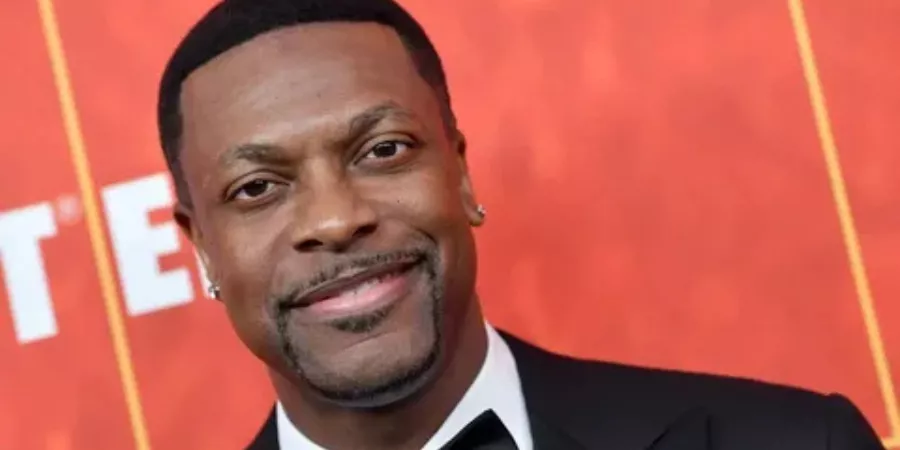
The first Rush Hour movie made $244 million worldwide in 1998. At its center was a skinny comedian from Georgia who talked faster than most people think, moved like electricity, and somehow made a buddy-cop formula feel brand new.
Chris Tucker did not arrive in Hollywood quietly. He exploded onto screens with a voice that could shatter glass and a physical comedy style that seemed borrowed from cartoons. But the real story, the one that makes his career so fascinating, is not about how he became famous. It is about what he did after he got there.
A Decatur Kid With Bigger Dreams
Christopher Tucker was born on August 31, 1971, in Decatur, Georgia. His parents, Mary Louise and Norris Tucker, raised 6 children in a home where money was tight but laughter was currency. The Chris Tucker early life gave him material he would mine for decades, the rhythms of Southern Black church culture, the survival humor of working-class neighborhoods, the art of making people smile when things were hard.
He did not dream small. While still in his teens, Tucker studied the greats: Richard Pryor, Eddie Murphy, the comedians who turned stand-up into something almost holy. He practiced obsessively. Then, in his early twenties, he did what every ambitious comedian eventually does. He moved to Los Angeles with no backup plan.
The Def Comedy Jam performance circuit became his proving ground. These were stages where crowds showed no mercy, where you either commanded the room or got destroyed trying. Tucker commanded. His Chris Tucker biography really starts here, in these clubs where he developed the manic energy and vocal gymnastics that would become his signature.
The Role Nobody Expected to Matter
In 1995, Ice Cube offered Tucker a part in Friday, a low-budget comedy about a day in a South Central Los Angeles neighborhood. The character was Smokey, a marijuana-smoking sidekick who existed mostly for comic relief. Tucker took what could have been a throwaway role and made it unforgettable.
The Friday movie Smokey role became instantly quotable. Every line reading, every facial expression, every moment of physical comedy landed with precision. The film cost $3.5 million to make and earned over $28 million at the box office. More importantly, it became a cultural phenomenon, particularly within Black communities who saw their neighborhoods reflected with humor and honesty.
But Tucker did something unexpected. He turned down the sequels. Despite the success, despite the easy money, he walked away. His reasoning was personal, he had become a born-again Christian and no longer wanted to portray drug use. Hollywood did not understand. Fans did not understand. But Tucker had made his choice.
When Everything Aligned
By 1998, Tucker had appeared in several films: House Party 3, The Fifth Element (where he played the flamboyant Ruby Rhod), Money Talks, and Quentin Tarantino’s Jackie Brown. The Chris Tucker movies catalog was growing, but nothing prepared anyone for what happened with Rush Hour.
Director Brett Ratner paired Tucker with martial arts legend Jackie Chan. The concept was simple: a Hong Kong detective comes to Los Angeles and gets stuck with the LAPD’s most annoying officer, Detective James Carter. The Jackie Chan partnership Rush Hour should not have worked. Chan barely spoke English. Tucker never stopped talking. Their styles were completely opposite.
That opposition created magic. The Rush Hour movie franchise success was not accidental. Tucker brought manic verbal energy while Chan delivered precise physical comedy. They balanced each other perfectly. The first film grossed $244 million worldwide. The second, released in 2001, made $347 million. By the time Rush Hour 3 arrived in 2007, Tucker was reportedly earning $25 million, making him one of the highest-paid actors in Hollywood.
The Hollywood comedian Chris Tucker had reached a level of fame most performers only dream about. He was a household name. His impression of Detective James Carter, the voice, the attitude, the “do you understand the words that are coming out of my mouth?,” had entered the cultural vocabulary. For any other actor, this would be the beginning of an empire.
For Tucker, it was almost the end.
The Great Vanishing
After Rush Hour 3 in 2007, Chris Tucker essentially disappeared from Hollywood. No major films. No press tours. One of the biggest comedy stars of the 1990s Hollywood comedy films era just… stopped.
Understanding why Chris Tucker left Hollywood requires looking at multiple factors. His faith had become central to his identity. He no longer felt comfortable with the party-boy, profanity-heavy roles that had built his career. He had a son and wanted to be present. He needed to step back from an industry that was consuming him.
Then came the financial troubles. Reports surfaced that the IRS claimed Tucker owed more than $14 million in back taxes. The Chris Tucker net worth after tax issues became tabloid material, with his financial situation dissected publicly while he tried to resolve it privately. The man who once commanded $25 million per film was now facing serious economic consequences.
But something else was happening during these quiet years. Tucker was touring internationally, doing stand-up comedy for troops and audiences who remembered him. He was choosing projects carefully. He was living life on his terms rather than Hollywood’s timeline.
How Fame Actually Works
The question of how Chris Tucker became famous has a straightforward answer: exceptional talent meeting perfect opportunities. But staying famous, or choosing strategic absence, is far more complex.
Tucker’s career arc defies Hollywood logic. Most stars cling to relevance with desperate intensity. They take any role, chase any trend, do anything to stay visible. The American stand-up comedian actor from Decatur did the opposite. He achieved massive success and then voluntarily stepped away from it.
This decision cost him financially. Current estimates of Chris Tucker net worth range from $5 million to $11.5 million, substantial money by normal standards but a fraction of what he earned at his peak. Some of that loss came from tax issues. Some came from turning down lucrative roles that conflicted with his values. Some came from simply not working much.
But Tucker gained something else: control over his own narrative. He was not desperate. He was not broken. He was just done playing the game by other people’s rules.
The Slow Return
In 2013, Tucker appeared in Silver Linings Playbook, a small role that reminded people he could act in dramatic contexts. He did stand-up specials. He toured. He made selective appearances. Then, in 2023, Ben Affleck cast him in Air, the drama about Nike’s pursuit of Michael Jordan.
The Air 2023 Chris Tucker comeback was not a blockbuster return to leading roles. Tucker played Howard White, a Nike executive, with quiet confidence. It was a supporting part in an ensemble film, but it mattered. It showed that Tucker could still contribute to quality projects without needing to be the loudest voice in the room.
The Chris Tucker biography and career highlights now include this later chapter, the one where a comedian known for manic energy learned to modulate, where a star who burned bright discovered sustainability, where someone who had everything figured out which parts actually mattered.
What Remains
Detective James Carter remains Tucker’s most famous creation, the Rush Hour Detective James Carter who defined an era of action-comedy. But reducing Chris Tucker to that single role misses the larger point.
He succeeded in an industry designed to chew people up. He made choices that confused everyone but ultimately protected himself. He proved that you can walk away from fame and still have value. He showed that sometimes the bravest career move is the one that makes no commercial sense.
Chris Tucker career highlights include box office records and sold-out tours. But they also include humanitarian work, including trips to Africa with Bill Clinton. They include mentoring younger comedians. They include being present for his family during years when Hollywood wanted him elsewhere.
The story is not finished. Tucker still performs. He still takes roles that interest him. He still has that voice, that energy, that undeniable presence. But he does it now with wisdom that only comes from choosing yourself over the machine that made you famous.
Hollywood keeps spinning. New comedians emerge. Franchises get rebooted. The industry moves forward with ruthless efficiency. And somewhere in that chaos, Chris Tucker exists on his own terms, still funny, still relevant, still proof that talent eventually finds its way back, even after you walk away from everything.
Read also: Brooklyn Beckham: Biography, Age, Parents, Wife Nicola Peltz, and Career Journey