Combining Annuities and Wealth Management to Help Families Protect Their Assets and Plan for Retirement
What does it take to build something of your own when success comes with responsibilities few people see? For many entrepreneurs, independence begins with the desire to make their own decisions. The real test arrives when those decisions affect the livelihoods of others and the financial futures of the people they serve.
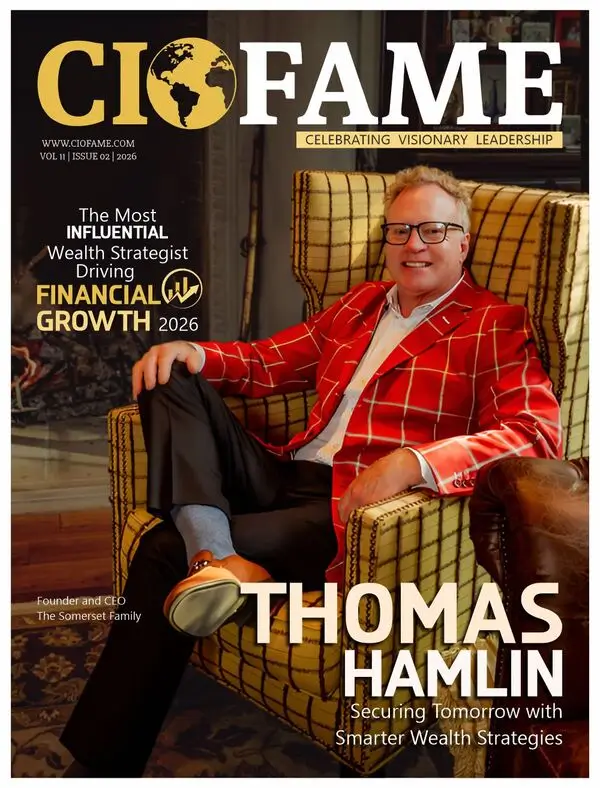
Thomas Hamlin learned this through experience. After entering annuity sales with no previous industry experience, he became the top salesman among 35 agents in just over a year. Professional success, however, did not deliver the independence he wanted. That search for greater control eventually led to the founding of Somerset Wealth Strategies and the development of a broader wealth management business.
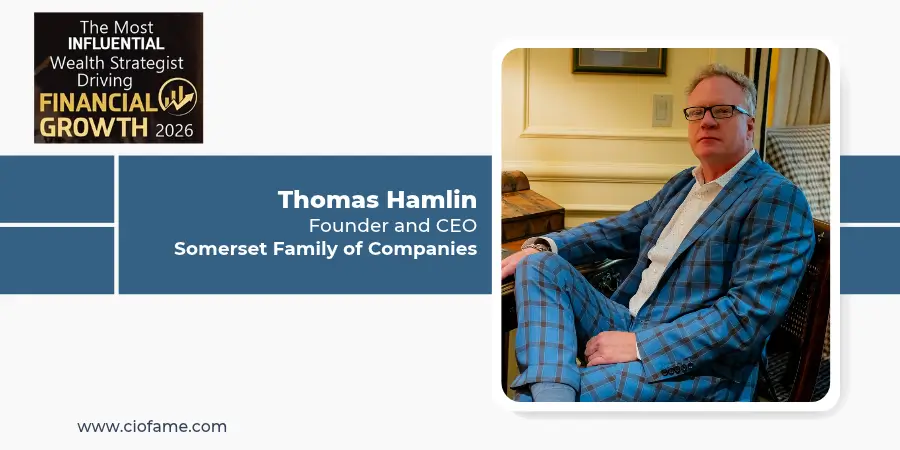
Today, as Founder and CEO of the Somerset Family of Companies, Thomas helps families plan for retirement through annuities and wealth management. His journey has taught him that building a business takes more than ambition; it requires persistence when the freedom to work for yourself brings challenges you never expected.
The Beginning: An Unexpected Career in Finance
Thomas began his financial services career in 1990 with Independent Advantage Financial (IAF), an independent company in Los Angeles that specialized in marketing annuities through newsletters, long before the internet became central to business. The firm served clients nationwide, and its work rarely required face-to-face meetings. Thomas quickly discovered a natural ability to sell financial products. Despite entering the industry without prior experience, he became the top salesman among 35 agents in just over a year.
Professional success did not translate into ownership. Even as the firm’s leading salesman, Thomas was unable to secure an equity stake. By late 1994, he and Jeff Oster—another top salesman who had mentored him—had grown dissatisfied. They left IAF and explored opportunities with major financial firms, eventually joining Prudential Securities.
“I don’t think that people who start their own companies are the smartest people, but what we lack in smarts we make up for in persistence, tenacity, drive, and a belief in doing the right thing for the benefit of those whom we serve.”
The Decision That Changed His Outlook
Thomas and Oster moved to Prudential expecting to continue working with their existing clients. The firm, however, did not follow their advice on how best to transfer those relationships and underestimated their former employer’s determination to retain the clients. Their first year became a struggle to secure the right to continue serving the people they had already built relationships with. The dispute ended in a compromise, with Prudential paying their former employer for the right to retain those client relationships.
The experience left a lasting lesson about agreements and client choice. Thomas learned to ensure that clients retained the right to decide whom they wanted to work with, regardless of arrangements between firms. After what he described as a mostly miserable period at Prudential, he and Oster began planning their next move.
In May 1997, they affiliated with an arm of Raymond James. Each established a separate branch—Oster later moving to New York while Thomas remained in Palos Verdes, California. Thomas also reunited with two former IAF colleagues, Tom Harding and Mark Huntley. These relationships helped lay the foundations for Somerset Wealth Strategies, LLC. The name came from Somerset County in England, the place Thomas’s father called home.
“I learned at that moment, never sign an agreement where at a minimum, the client doesn’t have the right to decide who they can work with.”
Meaning Behind Somerset
Thomas’s father grew up in Somerset County, England, in a large family with limited resources. At just 11 years old, he left home to avoid spending his childhood in an orphanage. He later contributed to the British war effort during the Second World War before immigrating to the United States. In New York he trained as a butcher, then moved to Burbank, California, where he opened his own restaurant and butcher shop. Through hard work and determination, he built a livelihood and laid a foundation for the family that followed.
Thomas drew inspiration from this history when he founded Somerset Wealth Strategies in 1997. The Hamlin family crest became the company’s logo, representing stewardship, hard work, and the Golden Rule. The business was established as an independent insurance agency while Thomas simultaneously affiliated with Raymond James Financial Services. Through an outside business activity arrangement, he handled much of his fixed insurance business through Somerset while conducting securities-related business and some fixed insurance business through Raymond James.
From the outset, the company was built around the belief that financial planning should help families create lasting security—a principle that continued to shape its development through different firms, products, and economic cycles.
The Reality of Running a Business
The decision to build his own company was driven by independence and a belief in serving clients according to his own standards. Yet the reality of entrepreneurship proved far more demanding than the freedom of working independently might suggest. When asked what it takes to become a business owner, Thomas offered a candid reply: “How much time do you have?” He explained that the tremendous increase in regulatory burdens and scrutiny had made the experience more painful than he could have imagined. Looking back, he admitted that, had he known what lay ahead, he might have reconsidered starting his own companies.
To explain his outlook, Thomas recalled a saying by Ray Kroc: “Blessed are the risk takers, for without them, nothing would ever be done.” Taking a risk can create an opportunity that would otherwise remain out of reach, but it also carries consequences that may take years to understand. For him, the willingness to take that risk is part of what makes entrepreneurship possible, even when the experience becomes painful.
Running a company often means spending less time on the work that originally inspired its founder as the responsibilities of ownership multiply. The financial costs can be significant, and supporting employees adds another layer of pressure. Owners must generate new opportunities, keep the organization operating, and respond to regulatory scrutiny—often while managing problems that arise without warning. Thomas has described the experience with humor, noting that, aside from the expense, responsibility, and constant challenges, running a business can feel like a small piece of heaven.
From One Firm to a Family of Companies
Thomas’s relationship with Raymond James lasted many years and became an important part of his professional record. He worked as a top-producing adviser and branch manager for 15½ years, became a seven-year member of the firm’s Elite Chairman’s Council, and ranked among its top 30 advisers nationally out of approximately 5,000 based on total production. He was also recognized as Raymond James’s leading annuity producer in the United States for nine consecutive years, measured by annual annuity premiums.
His earlier achievements at Prudential Securities included serving as first vice-president from October 1994 to May 1997. He ranked among the top five advisers nationally for personal annuity and insurance production, while his Los Angeles branch reached the number-one position in the country for annuity sales between 1996 and 1997. At Independent Advantage Financial, he ranked first and second in production over four consecutive years.
Several years after establishing Somerset Wealth Strategies, he separated from Raymond James. In 2012 and 2013, he purchased Bay Colony Securities, a 50-year-old securities broker-dealer based in Boston, and founded Somerset Wealth Management, LLC, a fee-based, fiduciary wealth management company. These developments helped establish the Somerset Family of Companies.
The three businesses serve different purposes. Somerset Wealth Strategies focuses on fixed insurance solutions, including annuities and life insurance. Somerset Wealth Management concentrates on fee-based wealth management and fiduciary investment advice. Somerset Securities provides a securities platform covering mutual funds, alternative investments, private placements, Delaware Statutory Trusts, 1031 exchange strategies, variable annuities, and other securities-related products.
Thomas serves as founder and chief executive of the family of companies, while also holding chief executive and chief compliance officer responsibilities at Somerset Securities. His qualifications include Series 7, Series 24, Series 14, Series 99TO, SIE, Series 63, Series 65, and Series 6 registrations, alongside life and disability insurance licensing. He has more than 35 years of experience in retirement planning, wealth management, and income-focused strategies. He has helped thousands of individuals and families across the United States, overseen the placement of more than $1 billion in client assets, and served nearly 5,000 clients across all 50 states and U.S. territories. He also works with clients in more than 20 countries, including those planning to retire abroad.
More than 98% of his business comes from long-standing client relationships and referrals. His work and views on retirement planning have appeared in publications including The Wall Street Journal, Barron’s, InvestmentNews, Financial Planning Magazine, and MarketWatch. He has also received recognition among America’s Top 100 Independent Financial Advisers from multiple publications.
Growth, Team Building, and the Limits of Scale
Somerset’s growth began gathering pace in 2000, when Thomas moved to Lake Oswego, Oregon, and started adding team members. Over the years, the business has expanded and contracted in response to changing needs, generally averaging between 10 and 20 team members in Portland, Oregon. Its marketing team has been based across Florida, Ohio, and other states, while its main strategic partner has operated from Topeka, Kansas.
Thomas has learned that growth comes with trade-offs. As a company becomes larger, its founder often becomes responsible for more administration, management, and training. The work that once brought the greatest satisfaction can gradually give way to tasks that demand time without offering the same sense of fulfillment. He has expressed this lesson simply: bigger is not always better.
He remains the leading producer across his firms, bringing in more than two-thirds of their revenue. As a result, he has less time for daily management than a conventional chief executive might have, making it essential to have experienced colleagues who can take charge and make decisions. He relies on senior team members to handle most situations independently, involving him when a decision carries particular importance.
Thomas believes developing capable employees takes years, while losing experienced staff can be expensive. Once he finds the right person, he invests in training, mentoring, inspiration, goal-setting, and a clear path for development. The firm’s senior team reflects this commitment. Andrew, his top lieutenant, has worked with him for 22 years. Derek, another adviser, has been with the business for 14 years. Meg, his assistant, has served for 12 years, while her sister Kristen, the office manager, has worked with the organization for 11½ years. Meagan, the compliance manager, has been with the firm for 10½ years. Together with Thomas, the six most senior members account for a combined 105 years with the organization.
His son Brian has also joined the business, and Thomas hopes that Brian will one day be able to look back on the company’s journey and write about it himself.
“Once we find a good person, we put a lot into them—training, mentoring, inspiring, goal setting, a path forward.”
Learning to Take Risks Without Losing Control
Thomas accepts that experimentation is part of entrepreneurship and that many initiatives will fail before the right approach emerges. He often refers to the idea of failing faster and believes failure can be useful when it leads to learning and better decisions. At Somerset, this willingness to experiment is balanced by careful attention to cost. Thomas explains that he is the last person to be paid, giving him a personal reason to avoid wasting money. He tries to close projects that are failing within a reasonable period while allowing promising ideas enough time to demonstrate their value.
This balance has become particularly important as the company embraces new technology. Thomas wants software and artificial intelligence to help each team member work as though they were ten or more people. He compares this goal to the coordination and readiness of a Navy SEAL team, where every member understands their role and contributes to the wider mission. He believes the financial services industry will change more over the next decade than many people can currently imagine, and Somerset is actively exploring AI and software programs that can improve efficiency and strengthen service.
Finding the Right Financial Focus
Somerset’s product strategy has changed considerably since its early years. Initially, more than 95% of the business involved annuities. The company later expanded into mutual funds and life insurance, followed by fee-based wealth management and, eventually, alternative investments and private placements. Thomas describes the experience of navigating these different stages as “The Good, the Bad and the Ugly.”
After decades of experience, he has chosen a simpler direction. The firm’s principal platforms are annuities and fee-based wealth management, supported by life insurance, supplemental long-term care, and a limited selection of alternative investments. Its annuity offering includes multi-year guaranteed annuities (MYGAs), fixed index annuities (FIAs), FIAs designed for growth, FIAs offering guaranteed lifetime income, registered index-linked annuities (RILAs), and single-premium immediate annuities (SPIAs).
Thomas expects these two main platforms to remain central to the business. He believes the combination offers a useful advantage because many wealth managers focus on one principal platform, whereas Somerset brings annuities and fee-based wealth management together. The intention is to give clients more ways to approach retirement income, growth, and risk, with recommendations based on individual goals and circumstances.
According to Thomas, combining fee-based wealth management with a broad range of fixed and variable annuities can change how some clients approach their portfolios. Traditional wealth management often relies on a combination of stocks and bonds. He argues that, where appropriate, annuities can give clients additional ways to manage risk while maintaining exposure to market growth. He is particularly interested in registered index-linked annuities, which can provide market-linked returns with a defined level of downside protection. He has also highlighted the potential of guaranteed lifetime income annuities during periods of favorable interest rates.
Technology and Lessons from Uncertainty
Technology has become a major part of Somerset’s approach to business development and client service. Thomas says the firm has a strong external technology partner that has helped bring its capabilities in line with those of some of the largest financial, wealth management, and retirement planning firms. Through this relationship, Somerset has access to a broad selection of products, technology, AI tools, and coaching resources.
The firm is embracing AI as part of its future direction. One of its developments is an AI Coach, which the company regards as a leading AI business trainer. Thomas believes the combination of technology and coaching can help employees work more effectively while preparing the business for changes across the industry. He also sees technology as a way to help a smaller team achieve more without compromising its ability to serve clients.
“Technology is HUGE, and we pride ourselves on being on the leading edge, often the bleeding edge because we effort so quickly to adapt and integrate. You can always count on Somerset to be Technology and AI-heavy.”
Thomas’s career has included several difficult market periods. His companies navigated the downturns of 2000 to 2002 and 2008, alongside other difficult periods dating back to 1987. The COVID-19 pandemic, however, brought a particularly painful lesson, especially in relation to real estate and certain investment strategies. No company had a complete contingency plan for a global pandemic of that scale. The experience forced him to reconsider the firm’s involvement in some private placements and alternative investments, and the companies have since moved away from many of those opportunities.
He believes there is a greater than 50% chance of another global pandemic within the next decade. That expectation has influenced how he thinks about risk and the need to strengthen the business against unexpected events. The firms have since reinforced their infrastructure. Thomas describes their preparation through the image of a house built to withstand a Category 6 hurricane when others are designed for Category 4 or, at most, Category 5.
A Business Built on Persistence and Trust
When asked about the reasons for the company’s long-standing success, Thomas points to stubbornness, persistence, and tenacity. He also believes there are still many deserving people who need help with their financial futures. Those beliefs have shaped the Somerset Family of Companies through changing markets, business transitions, and the evolution of financial products.
Somerset’s mission is to help pre-retirees and retirees achieve peace of mind through financial independence. Its approach centers on working with capable and ethical professionals, offering products and services the team believes in, and helping clients plan for their lives as a whole rather than focusing exclusively on portfolio values. Financial planning, in his view, should support the experiences that give life meaning—whether that means traveling, spending time with family, pursuing hobbies, or enjoying a healthier lifestyle.
The company also donates a portion of its annual net profits to non-profit organizations, with plans to increase its contributions as the business grows. Outside work, Thomas values time with his long-time partner, MacKenzie, and his five children: Brian, Lindsey, Sydney, Harper, and Tommy. He enjoys traveling with his family and has visited more than 70 countries, with a goal of exploring more than 100.
Thomas’s journey began with a sales role that gave him valuable experience but limited his future. It continued through a difficult move to Prudential, the establishment of Somerset Wealth Strategies in 1997, the growth of a team, and the development of a family of companies. Along the way, he learned that business ownership brings pressures that are difficult to appreciate from the outside. It demands persistence, careful decisions, an ability to learn from failure, and a willingness to adapt when circumstances change.
His firms have moved through several generations of financial products, from an early focus on annuities to a combination of annuities and fee-based wealth management. Technology and AI now form a growing part of the company’s plans, while experienced employees and long-standing client relationships remain central to its operations. Thomas continues to look ahead, aware that further changes will come. He expects the financial services industry to evolve rapidly and wants Somerset to be prepared through strong technology, a capable team, and a clear understanding of the clients it serves.
“We are looking forward to the future, regardless of what it brings, because we know that life grades us on a curve, thus ensuring at the end of the day, we will be an A+.”
“Failing is good and if you’re not failing, you’re not trying.”